
Remodeling in a Flood Zone: What Pompano Beach Homeowners Need to Know
If you own a home in Pompano Beach or anywhere along the South Florida coast, there's a good chance your property sits in a FEMA-designated flood zone. That doesn't mean you can't remodel — it just means you need to plan smarter. From material choices to permitting requirements, a flood-conscious approach to remodeling protects your investment and can even lower your insurance premiums over time.
We've worked with dozens of homeowners across Pompano Beach, Fort Lauderdale, and Deerfield Beach who wanted to upgrade their kitchens, bathrooms, and lower-level spaces without ignoring the realities of living in a flood-prone area. Here's what we've learned — and what you should know before you start your next project.
Understanding Your Flood Zone Designation
Before you pick out countertops or tile, the first step is understanding your property's flood zone classification. FEMA assigns zones like AE, VE, X, and others that indicate your level of flood risk. In Broward County, many properties in Pompano Beach fall within AE zones, which means they're in a high-risk area with a 1% annual chance of flooding.
Why does this matter for remodeling? Because local building codes in Broward County tie directly to your flood zone. If your renovation exceeds a certain percentage of your home's market value — typically 50% under the Substantial Improvement Rule — you may be required to bring the entire structure up to current flood compliance standards. That can include elevating mechanical systems, using flood-resistant materials below the base flood elevation, and more.
How to Check Your Flood Zone
- Visit FEMA's Flood Map Service Center and enter your address.
- Check with the City of Pompano Beach Building Department for local elevation certificates.
- Ask your insurance agent — they'll know your zone and base flood elevation (BFE).
Choosing Flood-Resistant Materials
One of the biggest mistakes homeowners make during a remodel is choosing beautiful materials that can't survive moisture. In a flood zone, you want materials rated as flood-resistant by FEMA, which means they can withstand direct contact with floodwater for at least 72 hours without sustaining damage that requires more than cosmetic repair.
Smart Material Choices for Flood-Prone Homes
- Flooring: Porcelain tile, ceramic tile, and luxury vinyl plank (LVP) are excellent choices. They resist water damage far better than hardwood or carpet. For homeowners in Pompano Beach, tile is already a popular choice because it stays cool underfoot in our warm climate.
- Cabinetry: Marine-grade plywood or solid wood with waterproof finishes outperforms standard particleboard cabinets, which swell and disintegrate when exposed to water.
- Walls: Below the BFE, consider using cement board or fiberglass-faced drywall instead of standard paper-faced drywall. These materials resist mold and hold up dramatically better after water exposure.
- Insulation: Closed-cell spray foam insulation is moisture-resistant and doesn't absorb water like fiberglass batts. It also adds structural rigidity to walls.
Kitchen and Bathroom Remodeling Considerations
Kitchens and bathrooms are the two most popular remodeling projects we handle, and they're also the rooms most affected by flood-zone requirements because of their plumbing and electrical systems.
In a kitchen remodel, we recommend elevating electrical outlets and switches above the base flood elevation whenever possible. If your home's first floor is at or near the BFE, this might mean placing outlets slightly higher on the wall than standard height. It's a small adjustment that can prevent thousands of dollars in electrical damage.
For bathroom remodeling, waterproofing is already a priority — but in a flood zone, we take it further. Shower pans, floor membranes, and proper drainage become even more critical. Custom tile work with properly sealed grout lines and high-quality waterproof membranes underneath ensures your bathroom can handle both daily use and unexpected water events.
The Substantial Improvement Rule: Don't Get Caught Off Guard
This is the rule that surprises most homeowners. Under FEMA's National Flood Insurance Program and Broward County's local floodplain management ordinances, if the cost of your remodel equals or exceeds 50% of your home's market value, the entire structure must be brought into compliance with current flood regulations.
That could mean:
- Elevating the home above the base flood elevation
- Relocating HVAC systems, water heaters, and electrical panels above the BFE
- Installing flood vents in enclosed areas below the BFE
- Significant structural modifications
This doesn't mean you shouldn't remodel — it means you need an experienced contractor who understands these thresholds and can help you plan accordingly. Sometimes it makes sense to phase a project over multiple permit cycles. Other times, investing in full compliance actually increases your home's value and dramatically reduces your flood insurance costs.
A Real Example
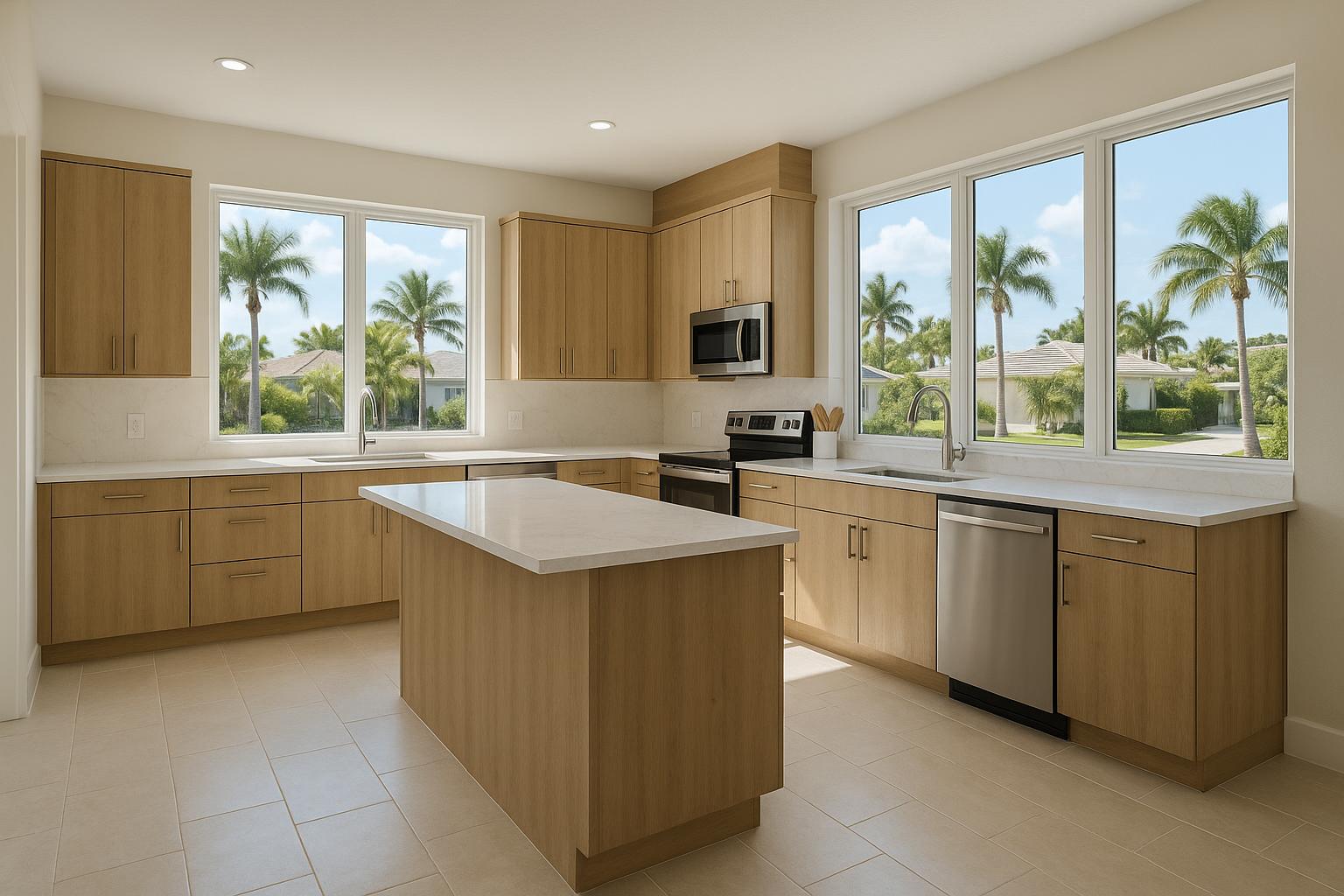
We recently worked with a homeowner in Pompano Beach who wanted a full kitchen remodel and new flooring throughout the first floor. The home was in an AE flood zone with a BFE of seven feet, and the finished floor was at six feet. By carefully scoping the project and selecting flood-resistant materials throughout, we kept the renovation under the substantial improvement threshold while still delivering a stunning, modern kitchen with custom tile backsplash and new luxury vinyl plank flooring.
Permits and Inspections in Broward County
Any significant remodeling project in Pompano Beach requires permits through the city's building department. For homes in flood zones, there are additional requirements including elevation certificates and floodplain development permits. Skipping this step isn't just risky — it can void your flood insurance policy entirely.
A qualified remodeling contractor will handle the permitting process for you, ensuring every aspect of your project meets both the Florida Building Code and local floodplain management regulations. This is one area where cutting corners simply isn't worth it.
How to Protect Your Remodeling Investment Long-Term
Beyond the initial construction, there are steps you can take to protect your newly remodeled space:
- Maintain your flood insurance. Even if it's not required by your mortgage lender, flood insurance is essential in South Florida.
- Keep an elevation certificate on file. This document can help you get lower insurance rates and proves compliance during resale.
- Install a sump pump or backflow preventer if your home has any below-grade spaces.
- Document everything. Keep records of materials used, permits pulled, and inspections passed. This documentation is invaluable for insurance claims and future buyers.
Start Your Remodel the Right Way
Remodeling in a flood zone doesn't have to be overwhelming. With the right planning, materials, and contractor, you can create the kitchen, bathroom, or living space you've been dreaming about — while building in resilience against South Florida's weather realities.
If you're a homeowner in Pompano Beach, Fort Lauderdale, Coral Springs, or anywhere in the surrounding area and you're thinking about a remodel, we'd love to talk through your options. At Local Basement Contractors, we understand the local codes, the climate challenges, and the materials that work best in our region. Let's build something that lasts.